
M'Hamid & the Drâa
M'Hamid El Ghizlane, the last oasis before the Sahara
Palm grove, ksour, the dunes of Erg Chegaga and unspoiled nature: a land to understand before crossing it.
The Drâa Valley
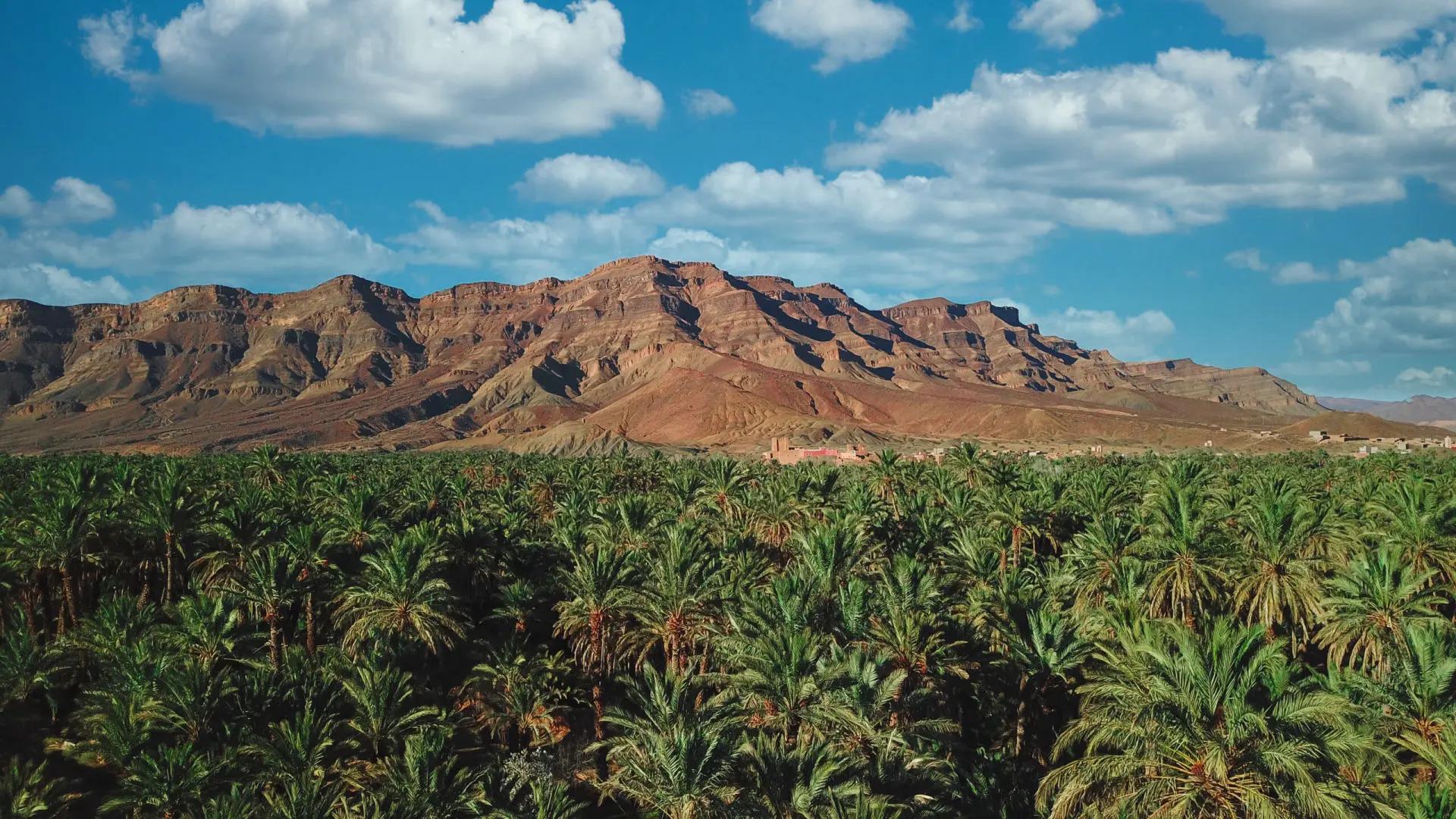
From the High Atlas to the Sahara, the Drâa Valley unfolds more than 200 kilometres of palm groves, mud-brick ksour and oasis villages. M'Hamid El Ghizlane is its last stop before the great desert expanses.
A former crossroads of the caravan routes linking Morocco to sub-Saharan Africa, the valley remains a living land: oasis farming, crafts, music and traditions are handed down from generation to generation.
Erg Chegaga
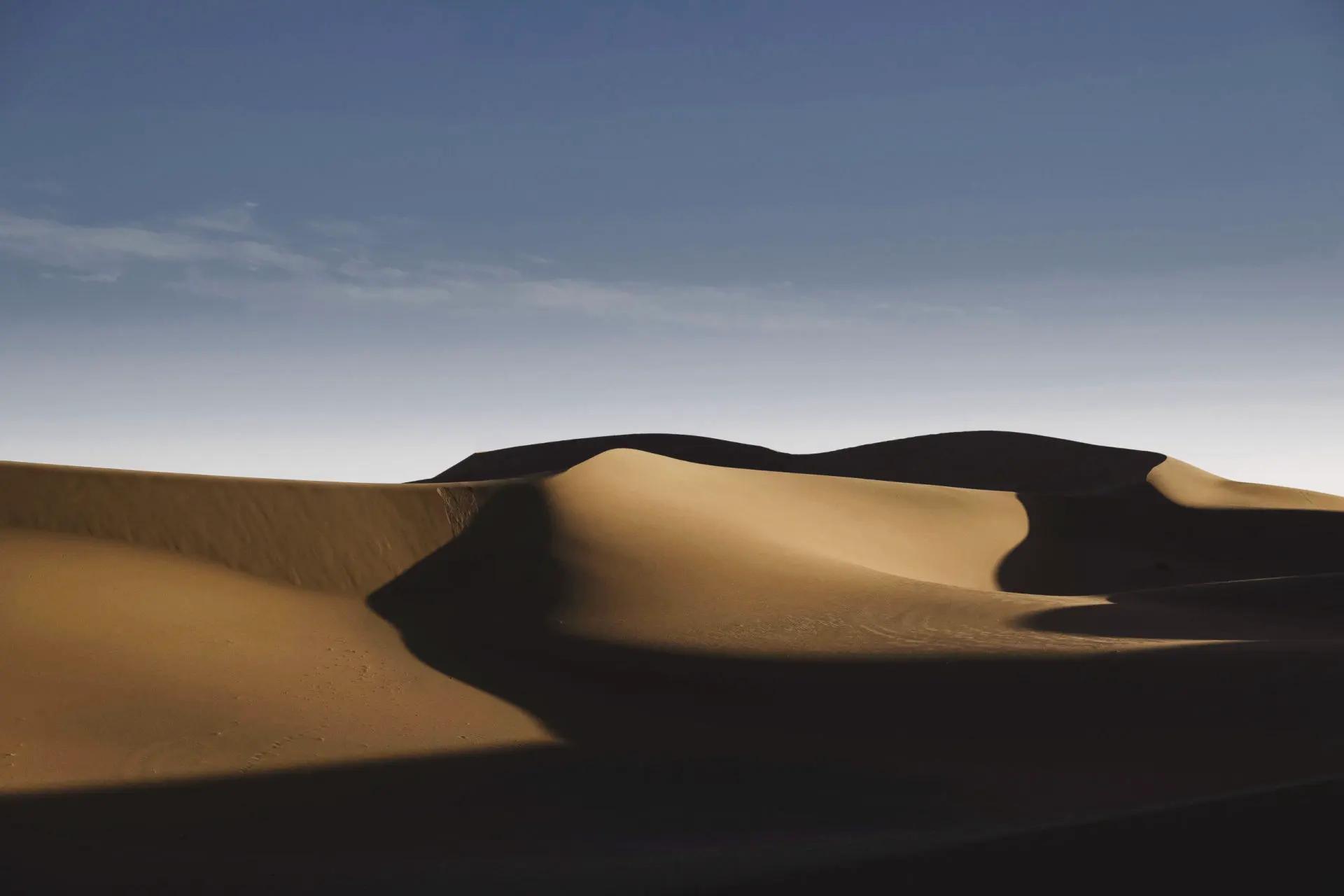
About forty kilometres from M'Hamid, Erg Chegaga spreads out one of the largest seas of dunes in Morocco, far from the bustle of classic tourist circuits.
Accessible by 4x4, by camel or on foot, Chegaga offers an unspoiled desert: silence, ever-changing light and nights under a sky free of light pollution.
Heritage
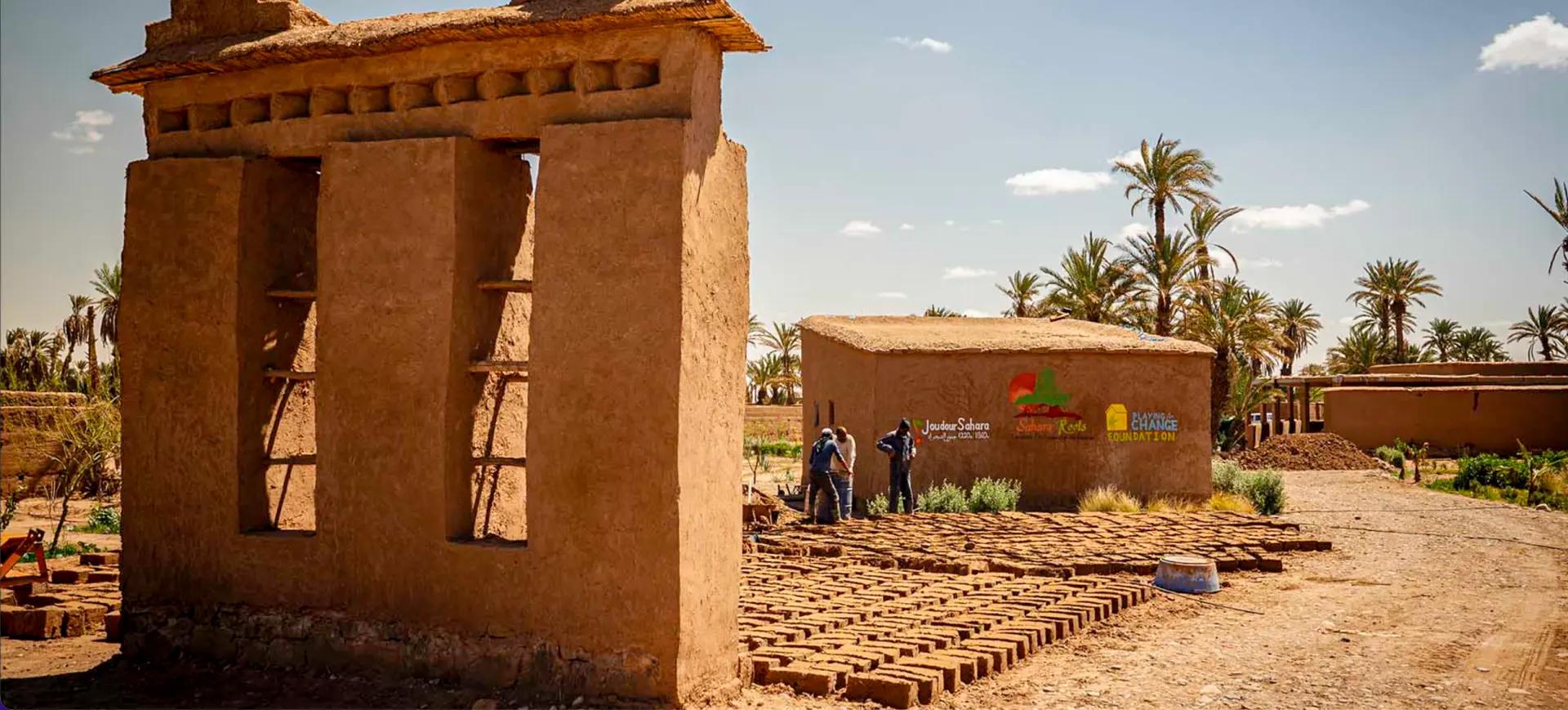
Earthen ksour and kasbahs, bioclimatic architecture, crafts, oasis cuisine and the music of the Drâa (Ganga, Ahidous, Chamra…) make up a dense cultural heritage, carried by the people of M'Hamid - all the way to an introduction to Saharan know-how: earth architecture, pottery, cooking.
The region also holds some of the oldest rock engravings and paintings in Morocco, spread between the Drâa Valley and Jbel Bani - traces of hunters, herders and metalworkers. Major sites: Foum Larjam and the Tidri necropolis, east of M'Hamid.
Nature
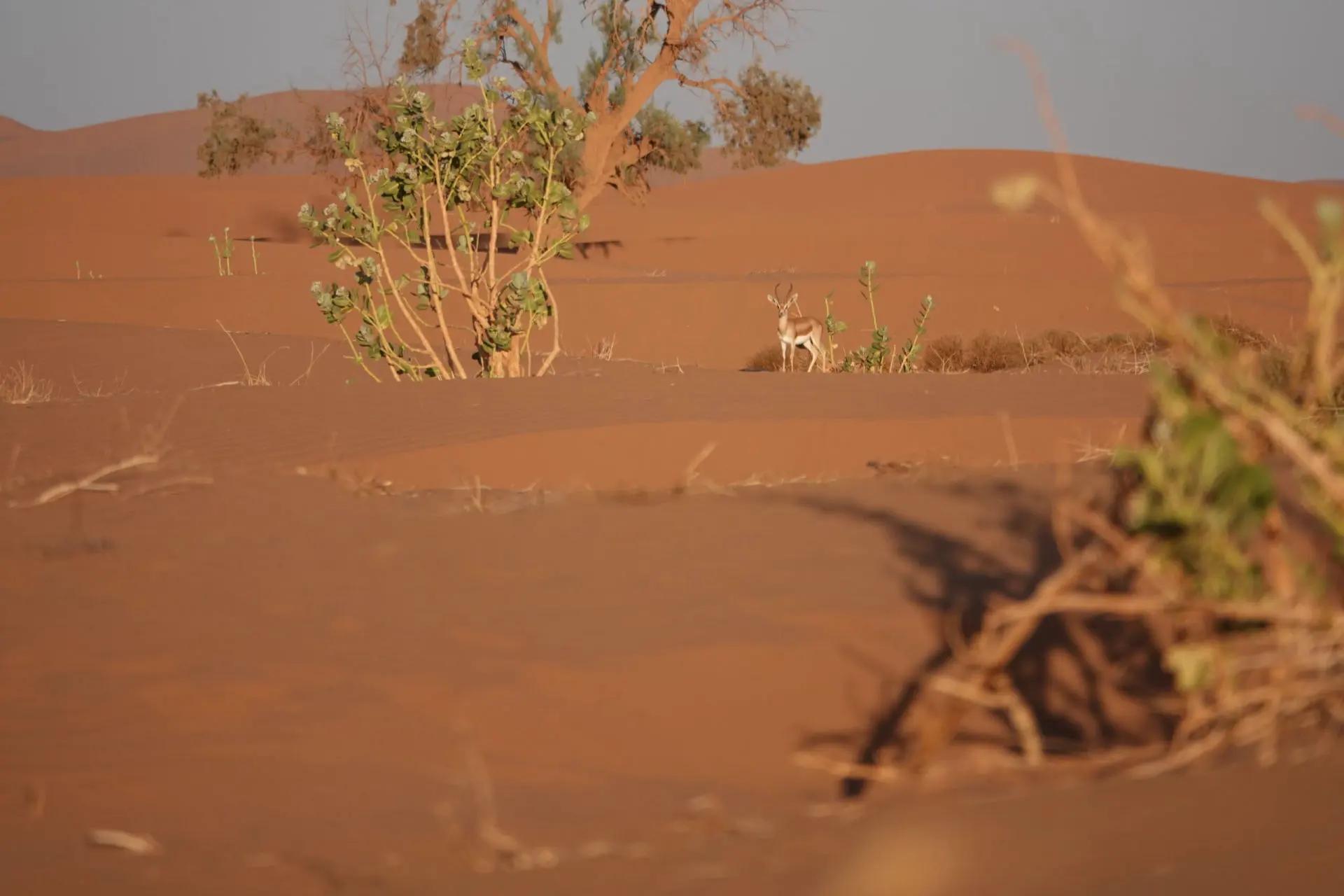
Explore the ecological richness of Iriqui National Park, between the Drâa wadi and the foothills of the Anti-Atlas: wooded steppe of Acacia raddiana, tamarisk dune areas and medicinal plants. Wildlife spotted: dorcas gazelle, Barbary sheep, houbara bustard, reptiles and migratory birds - as well as reintroduced rare species such as the oryx, the addax and the red-necked ostrich.
The region also faces major challenges: water management, desertification, sand encroachment and oasis preservation, at the heart of the work carried out by the Joudour Sahara Association.
Frequently asked questions
Where is M’Hamid El Ghizlane?
M’Hamid El Ghizlane, in Zagora Province in Morocco, is the last oasis of the Drâa Valley before the vast expanses of the Sahara.
How far is Erg Chegaga from M’Hamid?
About forty kilometres from M’Hamid. Erg Chegaga can be reached by 4x4, by camel or on foot.
How long is the Drâa Valley?
From the High Atlas to the Sahara, the Drâa Valley stretches over more than 200 kilometres of palm groves, mud-brick ksour and oasis villages.
What is there to discover around M’Hamid?
Earthen ksour and kasbahs, the palm grove, the dunes of Erg Chegaga, Iriqui National Park (dorcas gazelle, Barbary sheep, houbara bustard…) and some of the oldest rock engravings in Morocco, including Foum Larjam and the Tidri necropolis, east of M’Hamid.